Sep. 28, 2026
Choosing conductive yarn for an EMI, ESD, grounding, or functional textile product should start with the required electrical performance and manufacturing process—not simply the highest conductivity. For wearable products, silver fiber yarn may be suitable when softness and conductivity are important; for industrial textiles, stainless steel fiber yarn can offer a different balance of durability, temperature resistance, and cost; and for structural conductive connections, stainless steel wire may be more appropriate. The right specification depends on the end product, frequency range, mechanical stress, washing requirements, and connection method.
Before requesting a quotation, buyers should define how the yarn will function in the finished product. A yarn used for an ESD garment does not necessarily require the same construction as one incorporated into a grounding rope, shielding fabric, conductive seam, or industrial textile.
A useful RFQ should include:
End application
Required conductivity or electrical resistance
EMI shielding requirement, if applicable
Target frequency range
Yarn construction and blend ratio
Yarn count or diameter
Tensile and abrasion requirements
Weaving, knitting, sewing, or braiding process
Washing or environmental exposure
Required color and appearance
Roll or package requirements
Sample quantity and annual purchasing volume
This information allows the supplier to recommend a yarn construction instead of quoting a generic “conductive yarn.”
These materials should not be treated as interchangeable. They can all contribute conductive properties, but their textile behavior and suitable applications are different.
| Material | Main characteristic | Typical applications | Key limitation |
|---|---|---|---|
| Silver fiber yarn | High conductivity with textile flexibility | Wearables, functional textiles, grounding textiles | Silver cost and oxidation considerations |
| Stainless steel fiber yarn | Conductive, mechanically robust textile material | Industrial textiles, ESD products, shielding fabrics | May feel less textile-like depending on construction |
| Stainless steel wire | Stronger structural conductive element | Grounding connections, conductive ropes, reinforced structures | Less flexible and comfortable than textile yarn |
| Blended conductive yarn | Balances conductivity with textile properties | Garments, fabrics, specialty textiles | Performance depends strongly on blend and construction |
The decision should therefore be based on the finished product rather than the raw material alone.
Fibemas' product range includes silver fiber yarn, stainless steel fiber filament yarn, stainless steel fiber wire, 316L stainless steel microwires, stainless steel aramid wire, and related conductive textile materials. Buyers can therefore compare textile-oriented and more structural conductive materials within the same sourcing program.
Silver fiber yarn is generally considered when conductivity needs to be combined with textile comfort, flexibility, or skin-contact requirements.
It can be suitable for functional clothing, bedding, grounding textiles, wearable products, and other applications where the conductive component must remain integrated with a soft textile structure.
However, buyers should not specify silver simply because it has high electrical conductivity. The final product may also require resistance to repeated washing, abrasion, perspiration, chemicals, or mechanical stretching.
For commercial production, ask the supplier to provide:
Silver content or fiber composition
Yarn construction
Electrical resistance
Tensile properties
Washing recommendations
Oxidation/discoloration behavior
Available package size
Sample testing results
A silver-containing yarn can perform well electrically while still being unsuitable for a particular sewing, knitting, or washing process.
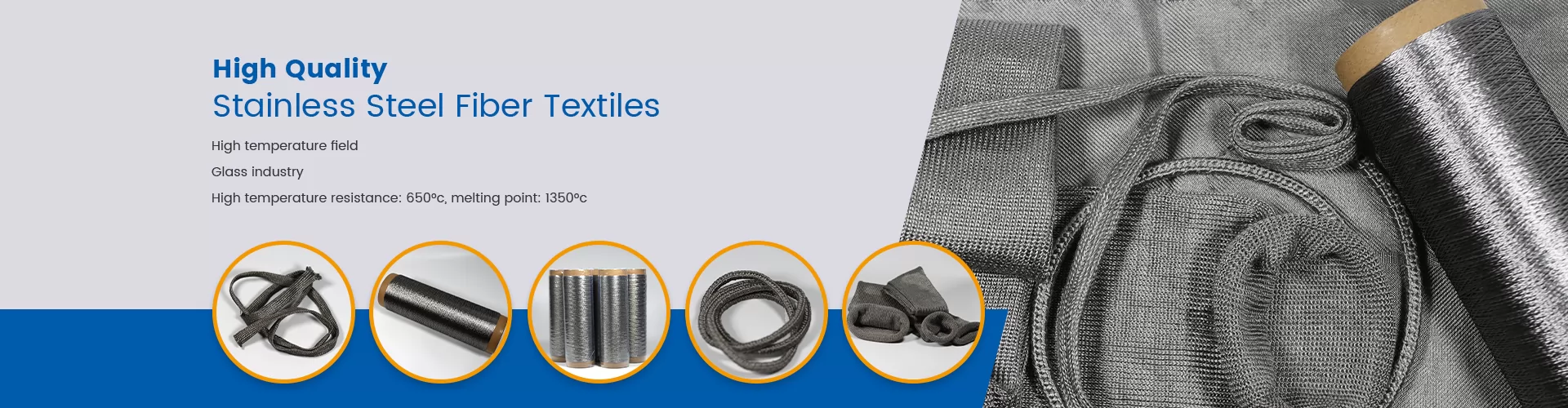
Stainless steel fiber yarn can be more relevant when the finished product needs conductive properties together with mechanical durability or industrial functionality.
Fibemas lists stainless steel fiber filament yarn and stainless steel fiber fabrics among its product range. Stainless steel fiber fabrics are also used for conductive and shielding applications where flexibility and textile processing are required.
For industrial procurement, stainless steel fiber yarn can be evaluated for:
ESD control
Conductive textiles
Shielding products
Industrial protective textiles
Conductive grounding structures
Reinforced textile components
The key point is to evaluate the yarn after it has gone through the customer's actual manufacturing process. A yarn that looks suitable in a laboratory sample may behave differently during high-speed knitting, weaving, braiding, or sewing.
No. Stainless steel wire is better treated as a structural conductive component, while stainless steel fiber yarn is designed to behave more like a textile material.
Wire can be useful where the buyer needs a defined conductive path, grounding connection, reinforcement, or higher mechanical strength. Fiber yarn is more appropriate when the conductive element must be integrated into a flexible textile construction.
For example, a grounding rope may benefit from a conductive wire or conductive rope structure, while a shielding garment normally requires a textile-compatible conductive yarn.
Choosing the wrong form can create manufacturing problems such as poor flexibility, uncomfortable hand feel, broken yarns, difficult sewing, or unreliable electrical connections.
Conductive yarn is only one part of a shielding system. The finished fabric's weave density, conductive coverage, continuity, seams, grounding, and construction all influence shielding performance.
A fabric with conductive yarn does not automatically provide a specific shielding effectiveness across every frequency.
For this reason, buyers should distinguish between:
Electrical conductivity: how easily current travels through the material.
Surface or volume resistance: the resistance measured according to a defined test method.
Shielding effectiveness: attenuation of electromagnetic energy, normally expressed in decibels over a stated frequency range.
These parameters should not be used interchangeably.
If the final application requires a defined shielding value, request test data for the actual fabric construction rather than relying only on the conductivity of the yarn.
Conductive yarn should be evaluated in the same manufacturing process that will be used for mass production.
Check yarn breakage, tension stability, surface appearance, and conductive continuity. High-speed machinery can expose weaknesses that are not visible in a hand-made sample.
Check whether the yarn can pass through the intended needle and thread path without excessive breakage. Also evaluate whether seams interrupt the conductive path.
For grounding ropes and conductive cords, check tensile strength, electrical resistance, connector attachment, and repeated bending.
For washable products, compare electrical performance before and after repeated washing. Do not assume that a conductive yarn will maintain the same performance after laundering simply because the raw material itself is conductive.
A professional RFQ should identify failure modes before production.
| Potential failure | Possible cause | Buyer verification |
|---|---|---|
| Conductivity decreases | Fiber damage, oxidation, coating deterioration | Resistance testing before/after aging |
| Yarn breaks during production | Excessive tension or unsuitable construction | Machine trial |
| Shielding performance is inconsistent | Poor conductive continuity | Finished-fabric shielding test |
| Fabric becomes uncomfortable | Excessive metal content or unsuitable blend | Hand-feel and wear trial |
| Performance falls after washing | Mechanical or chemical damage | Wash-cycle testing |
| Grounding connection fails | Poor connector or seam design | Pull and continuity testing |
| Appearance changes | Oxidation, abrasion, or finishing process | Aging and appearance inspection |
This type of testing is more useful than evaluating conductivity from a product datasheet alone.
Price per kilogram should not be the only comparison point. A lower material price can become more expensive if the yarn produces high breakage rates, unstable conductivity, excessive production waste, or failed finished-product testing.
Compare suppliers using:
| Procurement factor | What to confirm |
|---|---|
| Material | Silver, stainless steel, alloy, or blended construction |
| Electrical data | Resistance and test method |
| Mechanical data | Tensile strength and elongation where applicable |
| Processing | Weaving, knitting, sewing, braiding suitability |
| Customization | Blend ratio, size, color, package |
| Sampling | Pre-production sample availability |
| QC | Batch inspection and traceability |
| OEM/ODM | Ability to develop application-specific products |
| Delivery | Standard and customized lead time |
| Documentation | Specification sheet and test records |
Fibemas states that it supports OEM and ODM projects and can develop products based on customer drawings, samples, product information, branding requirements, and packaging specifications. For a customized conductive yarn project, these capabilities can be discussed before the buyer commits to bulk production.
Yes. A sample should be treated as a process-validation step, not just a visual approval.
The buyer should test the yarn in the actual knitting, weaving, sewing, or braiding process. If the final product has EMI shielding requirements, test the finished construction rather than relying only on raw-yarn conductivity.
For OEM projects, it is also useful to define the approved sample as the reference for future bulk production.
Yes, but shielding performance depends on the finished textile construction rather than the yarn alone. Weave density, conductive continuity, seams, grounding, and frequency range all need to be considered.
No. Silver fiber can be attractive for applications requiring conductivity and textile comfort, while stainless steel fiber may be more suitable for certain industrial or mechanically demanding applications. The correct choice depends on the finished product requirements.
Some conductive yarn and fabrics are washable, but the permitted washing method depends on material construction and finishing. Buyers should conduct wash-cycle testing on the actual finished product before defining commercial care instructions.
Ask for composition, yarn construction, electrical resistance, mechanical properties where relevant, recommended processing method, washing limitations, sample availability, and test methods. For shielding applications, request shielding-effectiveness data for the finished textile structure.
Fibemas states that it supports OEM and ODM cooperation and provides customized functional textile products. Buyers should provide the intended application, drawings or samples, required performance, packaging, and other production specifications for evaluation.
Buy conductive yarn when you need to integrate conductivity into your own textile manufacturing process. Buy finished conductive fabric when you need a ready-made shielding layer and want to reduce weaving or knitting development work.
Single-Sided vs Double-Sided Conductive Fabric: What Should Buyers Choose?
>EMI Conductive Paint vs Conductive Tape and Shielding Fabric: A Practical Comparison