Oct. 20, 2026
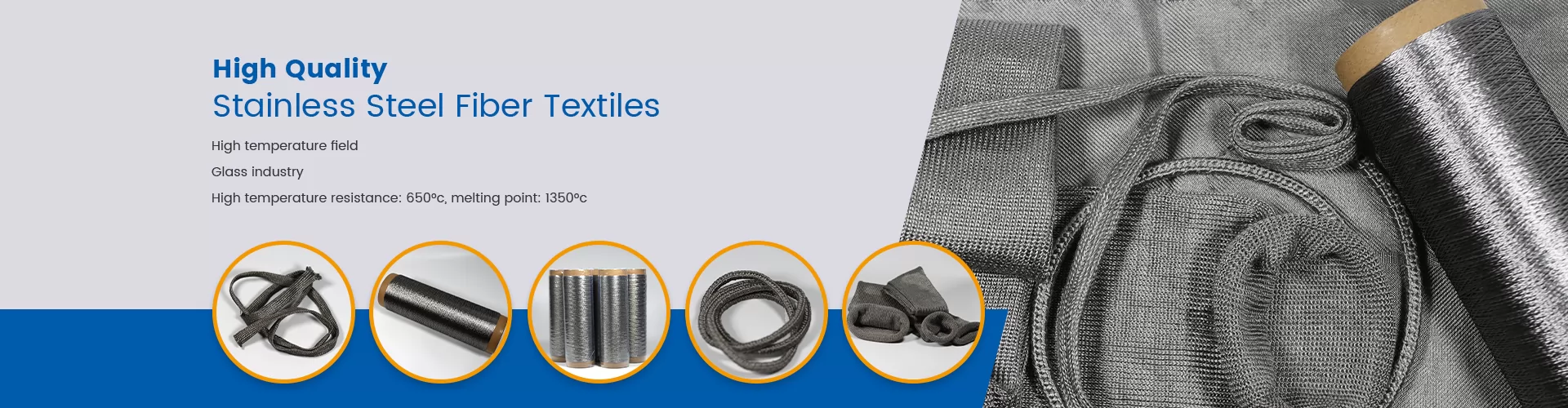
Stainless steel fiber sleeving and metal wire braided sleeving differ mainly in their constituent materials, structural design, flexibility, and intended protection. Stainless steel fiber sleeving uses fine metal fibers in a textile-like knitted or braided structure, making it suitable for flexible heat protection, abrasion resistance, and specialized industrial applications. Metal wire braided sleeving typically uses individual metal wires interwoven into a protective tube, often prioritizing mechanical protection, cable shielding, and resistance to external damage. Fibemas offers stainless steel fiber braided sleeves in stainless steel and FeCrAl options, allowing buyers to select a configuration according to temperature, dimensions, and application requirements.
| Feature | Stainless Steel Fiber Sleeving | Metal Wire Braided Sleeving |
|---|---|---|
| Basic construction | Fine metal fibers formed into a knitted or braided sleeve | Individual metal wires interwoven into a tubular structure |
| Flexibility | Depends on fiber size, knitting pattern, and sleeve density; often suitable for curved components | Depends on wire diameter, braid angle, and construction; may be flexible, expandable, or semi-rigid |
| Heat protection | Suitable for high-temperature applications when the material grade is appropriate | Depends on wire alloy, braid design, and operating conditions |
| Abrasion resistance | Provides protection against friction and surface wear, depending on construction | Can provide strong abrasion and mechanical protection |
| EMI/RFI shielding | Requires a conductive structure and application-specific shielding validation | Can provide electromagnetic shielding when the material, coverage, and grounding are suitable |
| Typical applications | Heat shielding, industrial cables, hoses, glass manufacturing equipment, and thermal processing | Cable harnesses, grounding systems, hose protection, and mechanical protection |
| Customization | Fiber material, inner diameter, length, and knitting or braiding structure | Wire alloy, wire diameter, braid density, tube diameter, and termination design |
Neither construction is universally better. The correct choice depends on whether the primary requirement is thermal protection, flexibility, mechanical durability, electrical shielding, or a combination of these functions.
Stainless steel fiber sleeving is a flexible protective material made by forming fine metal fibers into a tubular knitted or braided structure. Unlike a sleeve made from relatively thick individual metal wires, its fine-fiber construction can provide a more textile-like structure that adapts to curved surfaces and irregular components.
The actual flexibility, surface texture, and protection level depend on fiber diameter, material grade, construction density, and sleeve dimensions.
Flexible installation: A suitable knitted or braided sleeve can bend around cables, hoses, and other components without requiring a rigid protective tube.
Thermal protection: Stainless steel and FeCrAl fiber options can be used in elevated-temperature environments. The permitted operating temperature depends on the selected alloy and finished product.
Wear and abrasion protection: The metal fiber structure can help protect components from friction and surface wear. Actual resistance to cutting, impact, and crushing should be verified for the application.
Customizable dimensions: Fibemas lists customizable inner diameters from 2 mm to 120 mm for its stainless steel and FeCrAl sleeve options, with length and structural design also customizable.
Common applications include:
Cable and sensor-wire protection in industrial machinery.
Hose and tubing protection in hot or abrasive environments.
Automotive and exhaust-related thermal protection.
Industrial heating equipment and thermal processing systems.
Glass manufacturing and tempered-glass molding equipment.
Specialized conductive or antistatic components.
For applications involving very high temperatures, buyers should also consider FeCrAl rather than assuming all stainless steel fiber products have the same thermal capability.
Metal wire braided sleeving is generally manufactured by interweaving individual metal wires into a tubular mesh. Depending on the wire material and braid geometry, the sleeve may be flexible, expandable, spring-like, or relatively rigid.
Common materials include stainless steel grades such as 304 and 316, as well as other conductive metals selected for particular electrical or mechanical requirements.
Mechanical protection: The interwoven wire structure can resist abrasion and help protect enclosed cables or hoses against external damage. Performance against cutting, crushing, and impact depends on wire diameter, braid coverage, and installation.
Expandable construction: Certain braid designs can expand to fit over cable bundles or hoses and contract around the enclosed components.
Electrical conductivity: A conductive wire braid can provide an electrical shielding path when correctly designed and installed.
Potentially strong surface protection: A suitably engineered wire braid can be useful where external contact, abrasion, or mechanical damage is the main concern.
However, not every metal wire braid provides effective EMI/RFI shielding or high-pressure hose protection. Shielding depends on the electrical and geometric design, while hose burst containment requires a specifically engineered assembly rated for that purpose.
Flexibility is often a deciding factor when selecting protective sleeving for moving equipment, tight installation spaces, and irregular component shapes.
Stainless steel fiber sleeving can provide a textile-like structure that conforms to curved surfaces. Metal wire braided sleeving can also be flexible, but its behavior depends heavily on the individual wire diameter, braid angle, and coverage.
| Installation requirement | What to evaluate |
|---|---|
| Tight bends | Minimum bend radius and whether bending changes the sleeve structure |
| Moving hoses or cables | Flex-fatigue performance and resistance to repeated movement |
| Irregular component shapes | Conformability, sleeve diameter, and installation clearance |
| Frequent removal | Ease of installation, removal, and reuse |
| Protection from sharp edges | Abrasion and cut-resistance test results |
| High mechanical loading | Braid density, wire or fiber dimensions, and resistance to deformation |
Do not assume that every fiber sleeve is softer or every wire braid is more rigid. Ask the supplier for a sample when installation fit and handling characteristics are important.
The material grade is often more important than whether the sleeve is described as fiber-based or wire-braided.
Fibemas publishes the following temperature references for its sleeve products:
| Fibemas sleeve option | Published temperature resistance | Reference melting point |
|---|---|---|
| Stainless steel fiber woven or knitted sleeve | 650°C | 1,350°C |
| FeCrAl knitted sleeve | 1,200°C | 1,500°C |
These figures are published product specifications, not universal limits for every stainless steel or FeCrAl sleeve. Melting point is also not the same as a safe continuous operating temperature.
A stainless steel fiber sleeve may be suitable when the temperature falls within the selected product's rating and the application also requires flexibility, wear protection, or compatibility with the surrounding environment.
Fibemas lists stainless steel fiber sleeves for applications such as glass manufacturing equipment, high-temperature conveyor belts, conductive lines, and industrial machinery.
FeCrAl is worth evaluating when the application involves higher temperatures or demanding oxidation conditions. Fibemas lists a continuous working temperature of 1,000–1,200°C for its FeCrAl knitted fabric, while its sleeve specification lists temperature resistance of up to 1,200°C.
Before ordering, confirm the expected temperature profile, direct flame exposure, atmosphere, mechanical loading, and thermal cycling. A sleeve that performs well in one environment may not have the same service life in another.
Metal wire braided sleeving can provide electromagnetic interference and radio-frequency interference shielding when its conductive structure, coverage, and electrical connections are designed for the relevant frequency range.
Stainless steel fiber sleeving may also provide electrical conductivity, but its shielding performance cannot be inferred from the presence of stainless steel fibers alone.
Important factors include:
Conductive continuity across the sleeve.
Braid or fiber-network geometry.
Coverage and openings.
Operating frequency range.
Grounding and termination design.
Connections between the sleeve and the equipment enclosure.
Performance after bending, abrasion, or repeated installation.
If shielding effectiveness is a primary requirement, request measured attenuation or shielding-effectiveness data under a stated test method.
Fibemas also supplies stainless steel fiber shielding fabric, a flexible textile made from 30% stainless steel fiber and 70% CVC. Its standard published weight is 180 g/m², with a standard width of 1.5 m. This is a fabric product rather than a sleeve, but it may be relevant when a flexible textile shielding material is needed instead of a tubular protective structure.
Both sleeve types can protect enclosed components, but their performance depends on construction and the type of damage involved.
A dense wire braid may be advantageous when the main concern is external abrasion or mechanical contact. A metal fiber sleeve may be preferable when conformability and thermal protection are important alongside surface-wear resistance.
For demanding environments, evaluate the specific failure risks:
Abrasion: Repeated rubbing against brackets, housings, or adjacent components.
Cutting: Contact with sharp edges or tools.
Crushing: External loads that deform the sleeve and potentially damage the enclosed component.
Vibration: Repeated movement that may cause fatigue or wear.
Thermal cycling: Expansion and contraction during repeated heating and cooling.
Chemical exposure: Corrosion or degradation caused by process fluids, cleaning agents, or surrounding gases.
For hydraulic and fuel hoses, do not treat a protective sleeve as a substitute for a pressure-rated hose assembly or a certified burst-containment system. Confirm the requirements of the complete assembly.
Providing detailed operating conditions helps the supplier recommend a more appropriate material and structure.
Before requesting a quotation from Fibemas, prepare the following information:
Operating temperature: Include normal, maximum, and transient temperatures.
Material preference: Specify stainless steel fiber or FeCrAl if the application requires a particular alloy family.
Inner diameter: Provide the outside diameter of the enclosed cable, hose, or component and the required installation clearance.
Sleeve length: State the required length and whether the sleeve must cover the entire component.
Movement and bending: Describe vibration, flexing frequency, bend radius, and any repeated movement.
Protection requirements: Identify whether thermal protection, abrasion resistance, cutting resistance, or EMI/RFI shielding is the priority.
Environmental conditions: Include moisture, chemicals, oxidation, direct flame exposure, and outdoor use where applicable.
Verification requirements: Request relevant temperature, mechanical, electrical, or shielding test results.
Fibemas lists customized inner diameters, lengths, material selection, and structural design for its stainless steel fiber braided sleeve. Buyers can provide equipment specifications, drawings, or samples to support product evaluation.
No. Stainless steel fiber sleeving uses fine metal fibers in a knitted or braided textile structure, while conventional wire braided sleeving generally uses individual metal wires. Their flexibility, surface characteristics, and mechanical performance depend on the specific construction.
Either type can be flexible. Fiber-based knitted structures may offer textile-like conformability, while wire braids can be flexible or expandable depending on their geometry. Compare the minimum bend radius and performance under repeated movement before selecting a product.
The correct material grade matters more than the construction name alone. Fibemas lists 650°C for its stainless steel fiber sleeve and 1,200°C for its FeCrAl knitted sleeve. Confirm the rating and operating conditions for the exact product being purchased.
A conductive fiber structure may provide shielding, but effectiveness depends on construction, frequency, coverage, and electrical connections. Request measured shielding data if the sleeve will protect sensitive signal or power cables.
Yes. Fibemas lists customizable inner diameters, lengths, material options, and structural designs. Provide the component dimensions and operating requirements to confirm the available configuration.
For help choosing stainless steel fiber sleeving or FeCrAl sleeving for your application, contact Fibemas at Bob@fibemas.com. Share your operating temperature, component diameter, required protection, installation conditions, and any electrical shielding requirements so the team can evaluate a suitable product configuration.